Two Chais, One Menu, and a Lot of Confusion in Between
Integrating a profitable spiced beverage program into multi-unit commercial menus means navigating complex flavor profiles alongside strict operational guardrails. While enterprise networks across the GCC and Western QSR sectors face accelerating demand for traditional tea profiles like Karak Chai and Masala Chai, operators frequently mismanage the structural distinctions between these two menu lines.
For multi-site beverage directors, the conflict goes beyond flavor chemistry to distinct procurement architectures. Treating spiced tea builds as unstandardized, back-of-house craft steps instead of fixed operational inputs creates permanent labor bottlenecks, high product spoilage, and uncontrolled sensory variance across store networks.
Decoupling the Profiles: The Structural Differences Between Karak and Masala
Managing a multi-unit spiced tea program requires separating the distinct profiles of Karak Chai and Masala Chai. While both styles share a premium black tea base, their ingredient composition and extraction methods target entirely different consumer behaviors.
Karak Chai is built around a clean, heavy, texturally intense profile. Its identity rests on a strong, long-boiled CTC black tea yield, fortified heavily with concentrated evaporated milk and balanced with a single, dominant aromatic note — typically cardamom. Its consumption loop is fast, high-volume, and deeply embedded in daily GCC hospitality routines.
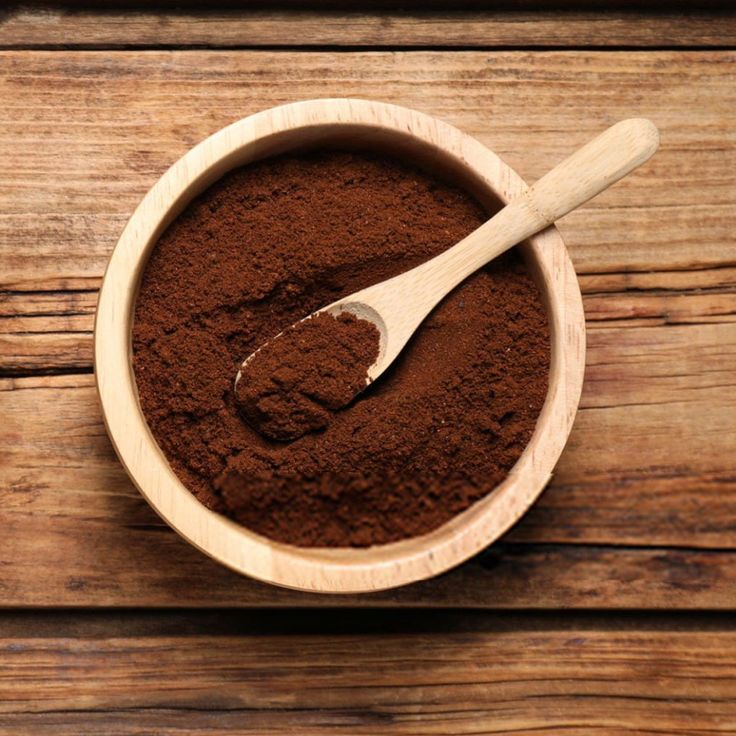
Masala Chai, by contrast, is a multi-layered spice matrix. It demands a complex bouquet of ground botanical aromatics, including fresh ginger, green cardamom, cinnamon, cloves, and black peppercorns. This intricate spice load introduces its own solubility challenges and sedimentation risk on the bar if the raw materials aren't standardized.
The Stovetop Bottleneck: Why Classic Batch Boiling Fails Multi-Unit Franchises
Traditional preparation models for both categories are fundamentally incompatible with modern speed-of-service standards. Authentically brewing either variant requires line staff to boil loose-leaf black tea with raw spices and liquid sugars for 15 to 20 minutes on a dedicated stovetop burner.
This legacy workflow imposes real operational penalties during peak morning rushes. A batch-prepared pot creates a rigid holding asset with a strict two-hour decay window. If customer traffic spikes past the pot's volume, the station hits an immediate ticket-time bottleneck. If traffic slows, the over-boiled leftovers oxidize, turn bitter, and get poured down the drain, driving up food cost variance.
Manual, multi-vendor ingredient assembly compounds the problem. When baristas add fresh dairy, granulated sugars, and crushed whole spices by eye under shift pressure, flavor homogeneity fractures across locations — and brand standards audits are the first to catch it.
The Soluble Strategy: Reconstituting Premium Chai in 30 Seconds
THE BASE eliminates back-of-house preparation complexity by compressing complex spice extractions into specialized, soluble powder systems. Our Chai Latte matrices capture the authentic flavor profiles of both lines at the industrial manufacturing stage in Dubai, UAE.
Our formulations carry the full milk structure, premium black tea solids, and precise spice allocations inside a single dry SKU. On the bar, the preparation cycle is reduced to one action: the barista doses 20 to 25g of the powder mix, adds hot liquid, and steams or stirs. The entire execution takes under 30 seconds.
This shift flattens the training curve close to zero. Because the botanical aromatics disperse completely and instantly without manual stovetop steeping, sifting, or spice crushing, a day-one trainee can deliver the same hot or iced drink consistently across all 50+ network nodes.
Protecting Volatile Aromatics Through Matrix Encapsulation
Raw ground spices like green cardamom and cloves suffer rapid flavor decay when exposed to atmospheric moisture and high bar temperatures. Volatile compounds like cineole begin oxidizing almost immediately after opening, leading to a flatter aroma profile and inconsistent drinks over time.
THE BASE insulates operators from that agricultural decay through particle encapsulation. Volatile terpene profiles are locked inside a dry carrier matrix, releasing their authentic top notes only on contact with hot water or steamed milk on the bar.
Packed into compact, high-barrier 500g doypacks that yield roughly 20 to 25 precision cups, our Chai Latte formulations protect quality margins from back-of-house shrinkage. With an 18-month shelf life that avoids expensive refrigeration infrastructure, inventory functions as a stable, predictable input rather than a perishable liability, across your entire menu footprint.