The Cost Nobody Books
Every beverage operation tracks food cost. Almost none of them track the milk.
Independent industry audits place cafe milk waste at 20 to 25% of total milk purchased. For a beverage program built on lattes, flat whites, karak, and chai, that figure means one carton in four or five is bought, refrigerated, handled, and then poured down the drain.
The loss is real, recurring, and almost never appears as a line item. It hides inside food cost variance — and because it isn't booked, it isn't managed.
An Unbooked Line Item With Three Vectors
Dairy shrinkage in beverage operations flows through three documented channels.
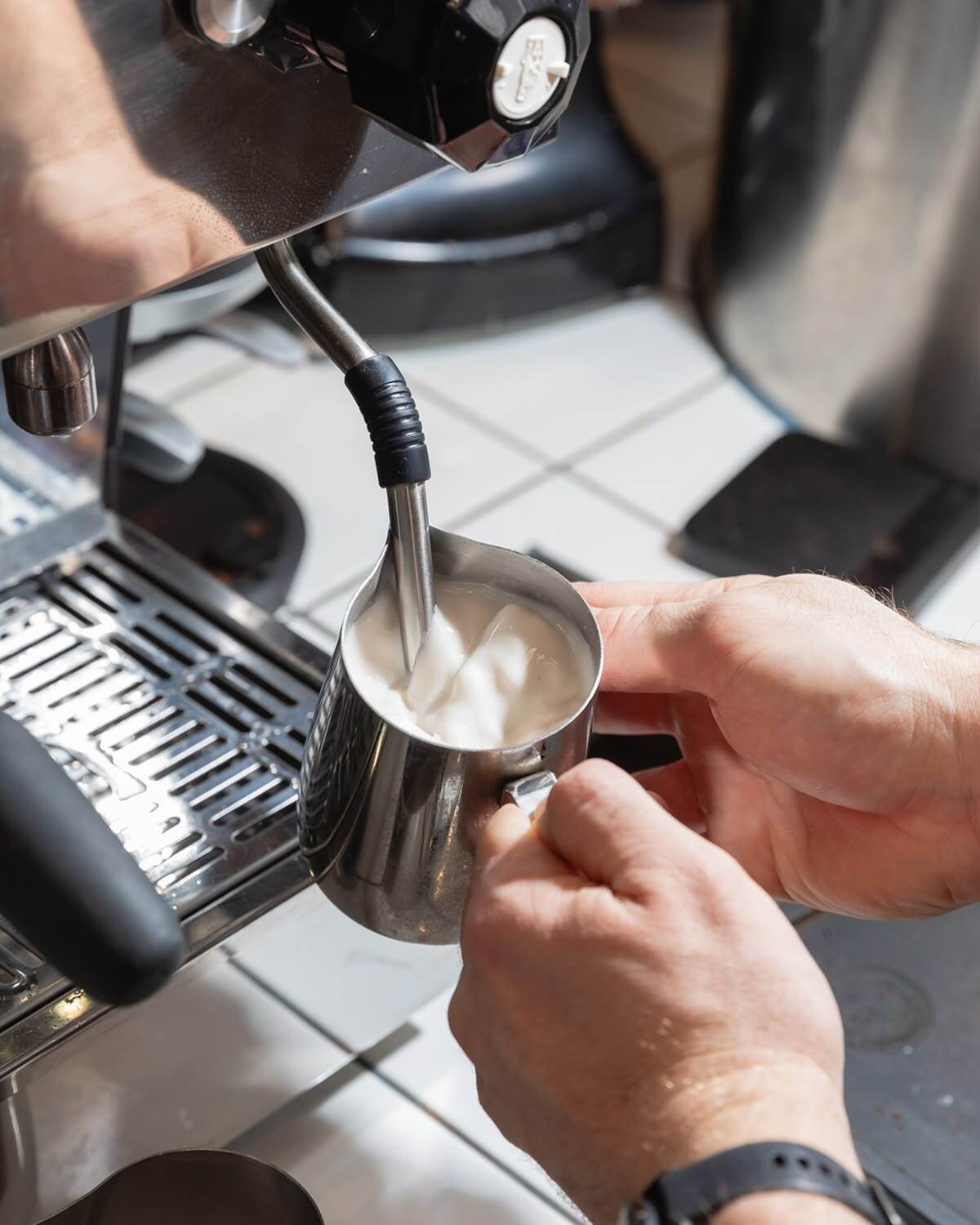
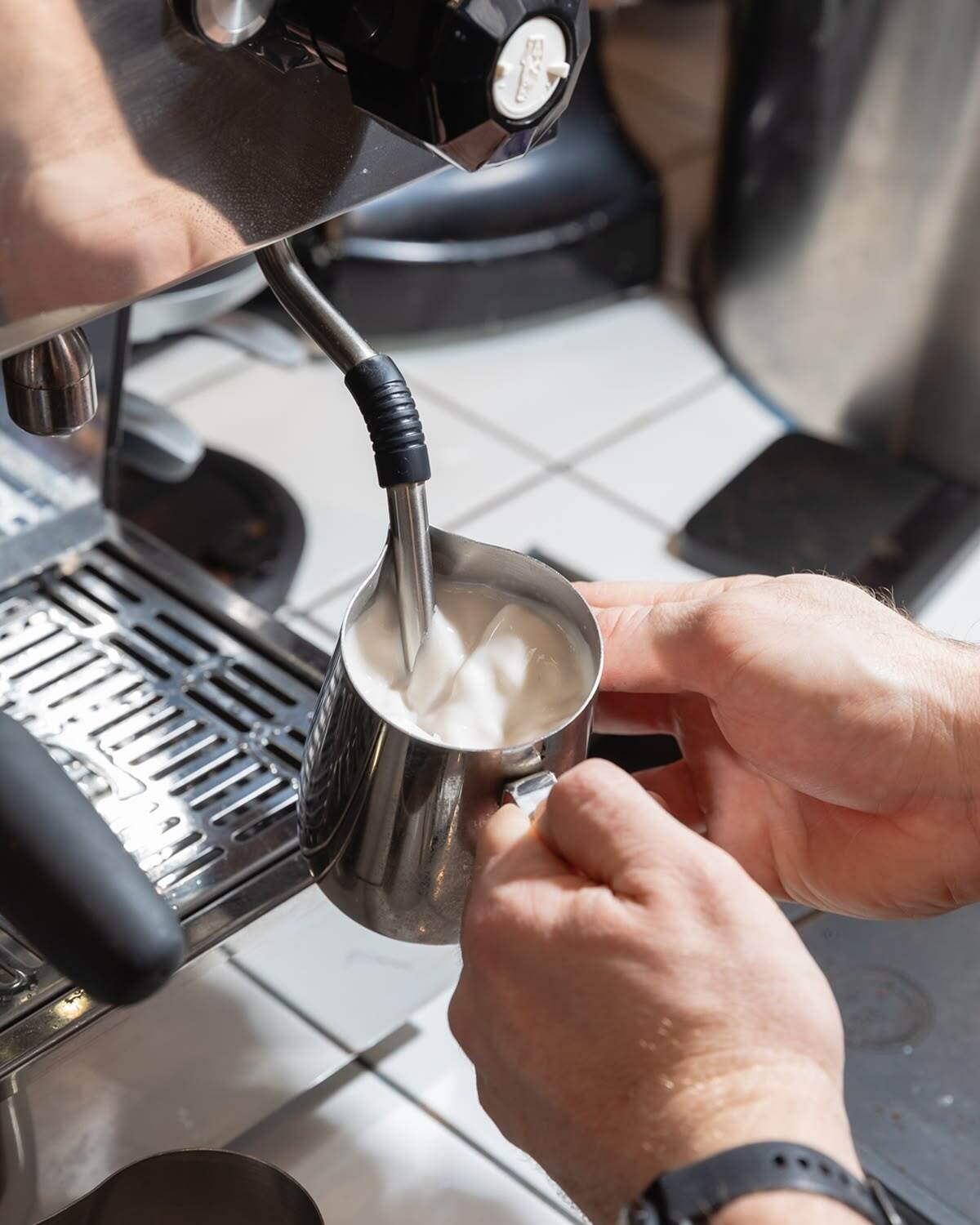
Steam pitcher overfill is the primary vector. Baristas fill pitchers by eye and by habit, and the remainder after each steam cycle can't be reused indefinitely. Across hundreds of drinks a day, the leftover milliliters compound into liters.
Remakes and dial-ins come second. Every mis-steamed pitcher, every wrong-milk order, every training shift consumes full servings of dairy that no customer ever pays for.
Expiry and holding decay close the list. Opened cartons age in the bar fridge, batch-steamed milk misses its window, and weekend overstock times out before Monday.
The pattern holds at the macro level too. Dairy is the single largest category of discarded food value in the United States, ahead of produce and bakery. The beverage bar is one of its main engines.
The Arithmetic Nobody Runs
Take one mid-volume store using 120 liters of fresh milk per week.
At a 22% waste midpoint, that store pours out roughly 26 liters weekly — about 1,370 liters a year. Multiply by the milk price in your market, then by the number of locations in the network, and the invisible line item becomes a visible five- or six-figure annual number.
The write-off also scales with growth. Every new location replicates the same pitcher habits, the same fridge, and the same decay clock. Shrinkage is one of the few costs that franchises copy perfectly.
Per-Serving Dosing: Deleting the Line Instead of Managing It
Operational fixes for milk waste exist — pitcher discipline training, portion markers, waste logs. Every one of them manages the problem, adds supervision load, and decays with staff turnover.
THE BASE removes the fresh-milk dependency itself. Our integrated beverage matrices carry the full dairy structure inside the dry powder. Cream lattes, chai, karak, and milkshake lines are dosed per order, to the gram, and reconstituted directly in the cup or pitcher for that single drink.
Nothing is steamed ahead of demand. Nothing waits in a fridge. Nothing hits an expiry window. The pour-out line doesn't shrink — it disappears, and with it goes the refrigeration CapEx and the daily carton count.
Inventory behaves differently too. A high-barrier 500g pouch holds for 18 months at ambient temperature, so the stock that used to expire in days now sits on a dry shelf across seasons, immune to weekend overstock and holiday demand swings.
The Audit to Run This Week
The write-off is measurable with tools every store already has.
For seven days, log milk purchased and milk theoretically consumed by sold drinks at spec volume. The gap between the two numbers, divided by purchases, is your real shrinkage rate. Most operators who run this audit for the first time land inside the documented 20 to 25% band.
Price that gap across your network for a year. Then compare it against a per-serving soluble program where the number is structurally zero.
Request a costed side-by-side model for your drink mix and volumes through our product catalog. The milk line is the easiest food cost win most beverage networks haven't claimed yet.