A Menu Item That Behaves Like a Capital Project
A milkshake looks like a menu item. On the balance sheet, it behaves like a capital project.
Adding shakes to a QSR, cafe, or fuel network menu almost never starts with the recipe. It starts with equipment: a shake freezer or soft-serve unit, a dedicated compressor, an electrical run, a floor drain, and a nightly heat-treat or teardown cycle. The commercial milkshake machine market is forecast to grow from USD 1.85 billion in 2025 to USD 2.98 billion by 2033, at a 6.8% CAGR, with the restaurant segment running fastest at 6.9%. That's a large volume of financed steel deployed to sell a cup that retails for four to five dollars.
The Freezer Is a Fixed Cost. Demand Is Not.
A shake freezer amortizes on a straight line. Shake demand doesn't. It concentrates in summer, in the afternoon daypart, and in a minority of stores inside any given network.
The result is a utilization spread that rarely gets modeled before the purchase order. A unit running near capacity in a highway site in July is the same unit sitting idle in a business district location in January — drawing power, consuming sanitation labor, and occupying roughly a square meter of the most expensive floor space in the building.
That asymmetry is why shakes are frequently the first item cut when a franchisee reviews station economics. The cup margin is attractive. The asset behind the cup is what fails the test.
Frozen Mix Is a Second Cold Chain. It Fails Where Nobody Measures.
Liquid shake mix requires refrigerated or frozen transport, refrigerated or frozen storage, and freezer volume that competes directly with food inventory. Every store becomes a node in a cold chain that exists for one category.
The failure modes are quiet. Temperature drift during delivery. Overrun variance inside the barrel. Product held past its window and dumped at close. Mix loss during heat treat and rinse cycles. None of it appears as a line item. It shows up as a slightly worse food cost percentage that nobody can attribute.
Water is also the dominant component of liquid mix, which means a meaningful share of freight spend moves water across borders under refrigeration. In markets like Kazakhstan, the GCC, and the US interior — where distances are long and ambient temperatures are high — that cost compounds before the first cup is even poured.
Flavor Count Is a Hardware Constraint. The Hopper Sets the Menu.
A shake freezer holds one to four flavors. That number is the menu.
Every additional flavor requires another barrel, another syrup pump, or a decision to drop something already on the board. Limited-time offers — the primary mechanism for driving beverage traffic — become an equipment scheduling problem rather than a marketing one. A regional flavor test that would take a week to design takes a quarter to deploy.
This is where the category quietly stalls. Operators want a seasonal shake program. The hardware allows them a permanent chocolate and vanilla, and a syrup rack that never quite tastes like the concept deck promised.
A Dry Base Moves the Shake to Ambient. The Blender Is Already in the Store.
THE BASE manufactures dry soluble shake bases in Dubai. Ingredients only — no equipment, no machines.
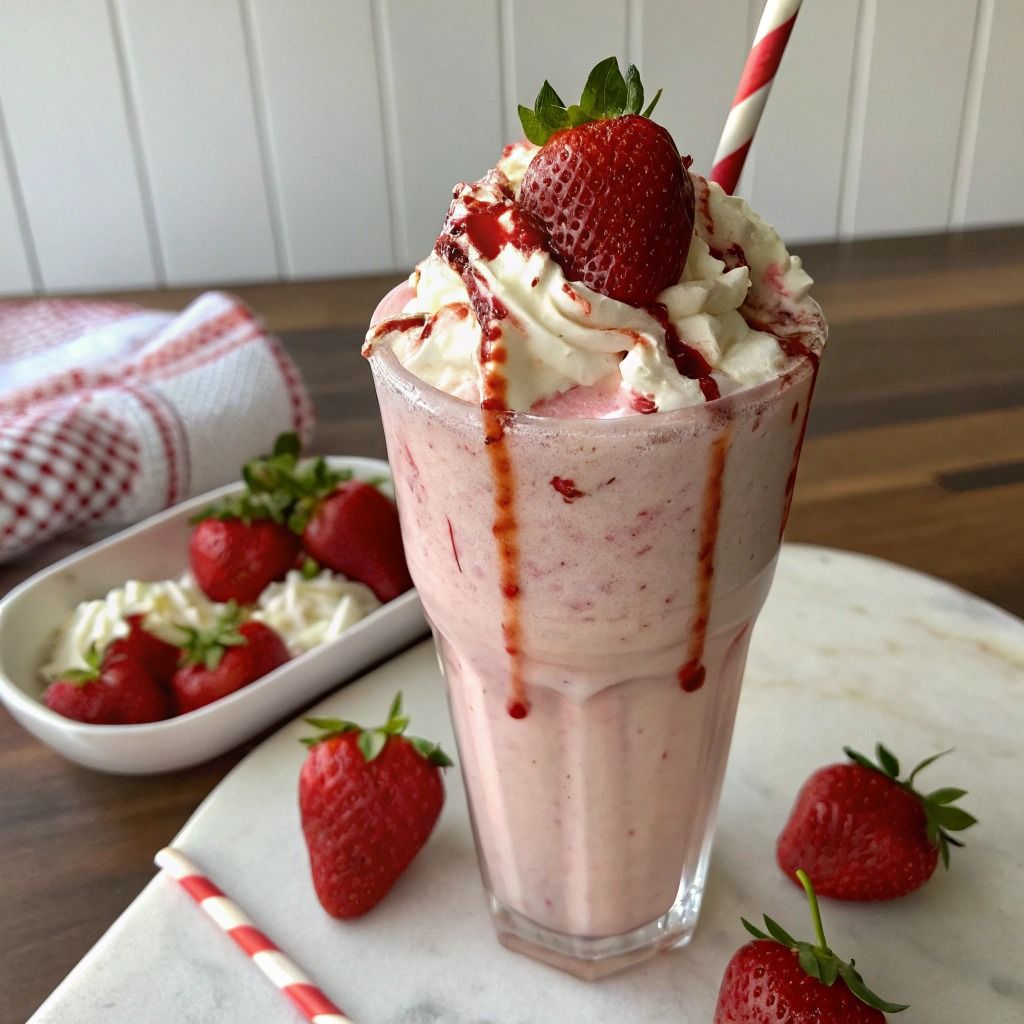
The build is a scoop, water or milk, ice, and the blender that's already behind the counter for smoothies and frappes. Preparation runs 15 to 60 seconds. No freezer, no compressor, no floor drain, no heat-treat cycle, and no second cold chain.
The base ships in high-barrier 500g doypacks with 18 months of ambient shelf life. Dosing is per serving, which means yield loss goes to zero rather than to an unmeasured dump at close. Brix and flavor consistency are fixed at the manufacturing spec rather than reconstructed by whoever's on shift. Production is halal certified.
Flavor count stops being a hardware question. A doypack is a SKU, not a barrel. A network can run four shake flavors year-round and rotate two seasonal builds without touching a single piece of equipment — which is what a shake program was supposed to be before the freezer quote arrived.
The wider category supports the case. The milkshake market is projected to move from USD 18.24 billion in 2025 to USD 26.09 billion by 2035, and the global frozen dessert market is forecast to exceed USD 102.9 billion in 2026. The demand isn't in question. The capital structure used to serve it is.
Next step: send us your target cup size, retail price, and flavor list, and we'll return a costed per-serving model against your current shake build, plus samples from the relevant lines. Both are available through our product catalog.