Summer's Biggest Category Is Also Its Biggest Bottleneck
Frozen and blended drinks are the summer engine of a beverage menu. The global frozen drinks category was valued near USD 12.9 billion in 2025 and is projected to reach roughly USD 21.8 billion by 2033, a compound growth rate close to 6.8%. QSR expansion is the stated driver — which means the volume lands on operators who are already short on labor.
The problem isn't demand. It's the build. A frappe assembled the traditional way is a four-ingredient job done under the heaviest ticket load of the year, at the exact moment the line has no spare seconds to give.
Summer Peak Is a Throughput Problem. Demand Was Never the Question.
North America holds the largest share of the frozen category, and Asia Pacific is the fastest growing — both carried by QSR and franchise formats rather than specialty cafes. That distribution matters. The chains adding frappe volume run on cashier-grade labor, high turnover, and fixed service windows, not on trained baristas with time to spare.
Peak frozen demand also clusters. It arrives in the hottest hours of the hottest months, when foot traffic is already at its ceiling. A menu that sells well in July can still fail in July if the build can't keep pace with the order rate.
The Four-Ingredient Build Is the Bottleneck. Assembly Time Compounds Under Load.
The conventional frappe is an assembly: a base liquid or powder, ice, a flavor syrup, and a dairy or cream component, each measured and added before the blend. Every ingredient is a separate reach, a separate dose, and a separate chance to get the ratio wrong.
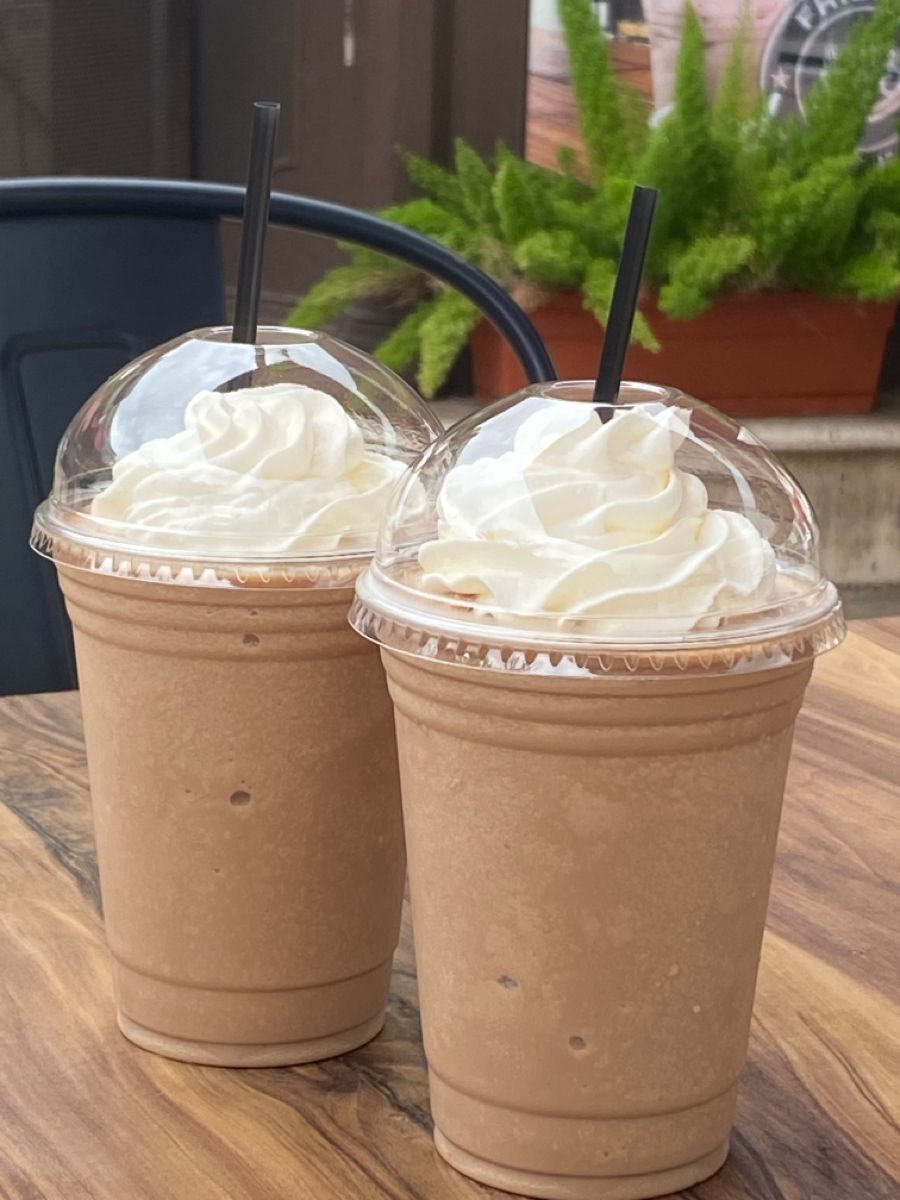
Under load, those steps compound. Four components at a few seconds each, multiplied across a queue, is where the summer line breaks. Consistency breaks with it, because a rushed assembly varies cup to cup in sweetness, texture, and Brix. The drink that defined the brand in the menu photo isn't the drink coming off the blender at rush.
A Single Sachet Build Collapses the Steps. One Scoop Replaces Four Pours.
A single sachet frappe base collapses the assembly into one step. The flavor, the sweetener, the body, and the stabilizer are pre-blended in fixed proportion inside the premix. The build is one measured scoop, ice, and water or milk, then blend.
The step count drops from four to one. So does the training. A new hire on their first shift produces the same frappe as the store's best operator, because the recipe is engineered into the powder rather than into a sequence they have to memorize. Brix and flavor hold at full consistency across every cup and every location.
Ambient logistics remove the second summer headache. THE BASE frappe bases ship as dry premix in high-barrier 500g doypacks with 18-month shelf life, so peak-season stock doesn't depend on cold chain or refrigerated storage. Per-serving dosing means no overpour and zero waste when the rush ends.
The Menu Scales Without the Labor. The Next Step Is a Costed Model.
The case for a single sachet build is strongest exactly when the line is busiest. Cutting three of four assembly steps returns seconds per drink at the precise hour those seconds are scarce — and it does so without adding equipment, freezer capacity, or headcount.
The way to size the gain is against your own summer volume. Request a frappe base sample and a costed model through our product catalog, compare it to your current four-ingredient build, and measure both the labor recovered and the consistency held across a peak shift. The demand is already there. The build is what decides whether you capture it.