A frappe looks cheap on paper: ice, milk, coffee, something sweet. In practice it is one of the drinks where cafés lose the most margin without noticing, because the real cost hides in waste, labour and inconsistency rather than in the ingredient invoice.
Here is how to calculate what a frappe actually costs you, and how a powdered base compares with building it from separate ingredients.
What goes into the cost of one frappe?
Count every line, not just the main ingredient:
- Base or ingredients: coffee, sugar or syrup, milk powder or cream, stabiliser to stop the ice separating
- Milk: the portion per cup
- Ice: small per cup, but not zero
- Packaging: cup, dome lid, straw
- Toppings: whipped cream, sauce, crumbs
- Waste: drinks remade because they separated, came out too sweet or too thin
- Labour: seconds at the blender multiplied by your cost per minute of barista time
The formula
Cost per cup = ingredients + milk + ice + packaging + toppings + (waste share) + (labour seconds × cost per second)
Then: food cost % = cost per cup ÷ menu price (without VAT) × 100.
Write it in a sheet with one row per drink. Most owners who do this for the first time find one or two drinks well above their target food cost.
Where scratch recipes lose money
Stabiliser is the hidden cost. Without a binder, a blended drink separates into ice and liquid within minutes. Cafés that skip it remake drinks or get them back from guests. Cafés that add it buy one more ingredient and one more step.
Every extra ingredient is a measuring step. Coffee, sugar, powder and stabiliser measured separately means four chances to get it wrong on a busy shift. Each mistake shows up as waste, not on the invoice.
Sweetness drifts. When syrup is added by pump, two baristas rarely make the same drink. Guests notice, and the drink that was popular last month quietly drops.
How a frappe base changes the numbers
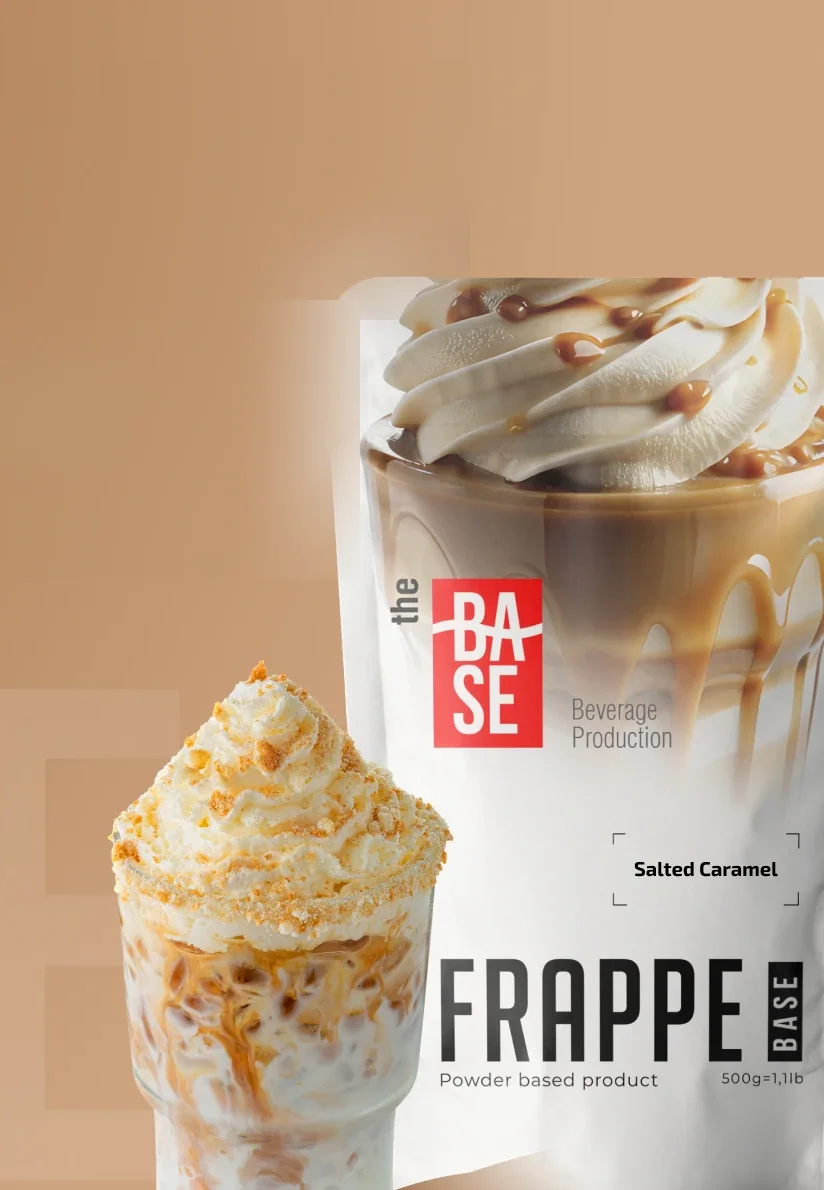
A powdered frappe base combines flavour, sweetness, milk solids and stabiliser in one product. The barista measures one scoop, adds milk and ice, and blends. The ingredient line on the invoice may look higher than plain sugar and coffee, but the per-cup cost often comes out lower once waste and labour are counted, because:
- One measuring step instead of four cuts mistakes.
- The stabiliser is already inside, so drinks hold their texture until the guest finishes.
- Every cup tastes the same, so remakes and complaints drop.
- Stock is one SKU per flavour instead of several ingredients per drink.
Run your own test
Make ten frappes each way on a normal shift. Record ingredients used, time per drink and every remake. Divide the totals by ten. That one-hour test gives you a real cost per cup for your café, which beats any supplier's claim, including ours.
Where the Base fits
the Base makes frappe bases in classic and seasonal flavours at its own factory in the UAE, Halal, HACCP and ISO 22000 certified, and its drinks are served at 5,000 points of sale in 24+ markets. We can also develop a custom frappe for a chain's menu. Samples are free, so you can run the ten-cup test above with our base against your current recipe.
FAQ
What is a good food cost for a frappe?
It depends on your concept and rent, but most cafés aim to keep drink food cost well below a third of the menu price. Set your own target and measure every drink against it.
Why does my frappe separate?
It is missing a stabiliser, or the stabiliser dose is too low for the amount of ice. A frappe base includes it in the right ratio.
Can a frappe base be used for non-coffee drinks?
Yes. Many cafés use flavoured frappe bases such as chocolate, vanilla or caramel without coffee for kids and non-coffee guests.
Request free frappe samples or visit our showroom in Al Quoz, Dubai, Monday to Saturday, 9:00 to 18:00.