To standardize drink recipes in a café, fix four numbers for every drink: the base dose in grams, the liquid in millilitres, the cup size and the method. Weigh the base, measure the liquid, use one cup per drink and train one method. When those four are written on a single card at the station, a new barista makes the same drink as your head barista from the first shift.
Why do café drinks taste different from shift to shift?
Most inconsistency comes from guesswork, not skill. The common causes:
- Scooping by eye instead of weighing, so a 20 g dose drifts to 15 g or 28 g
- Overfilling the cup, which dilutes the drink and spills during service
- Too many flavour accents stacked on one base
- Recipes kept in someone's head rather than on paper
Staff turnover makes this worse. A white paper by TFG Asset Management with the Emirates Academy of Hospitality Management put UAE hospitality employee turnover at roughly 25% to 30% a year. If a quarter of your team changes every year, the recipe has to live on the card, not in memory.
What doses should a café use for each drink base?
This is the standard the Base uses in training and in its showroom. Every line is base + liquid + cup + method.
Hot, milk based (8 oz cup, steam):
- Raf: 20 g base, 200 ml milk, 20 ml espresso
- Chocolate: 35 g base, 200 ml milk
- Matcha: 20 g base, 200 ml milk
Hot or cold:
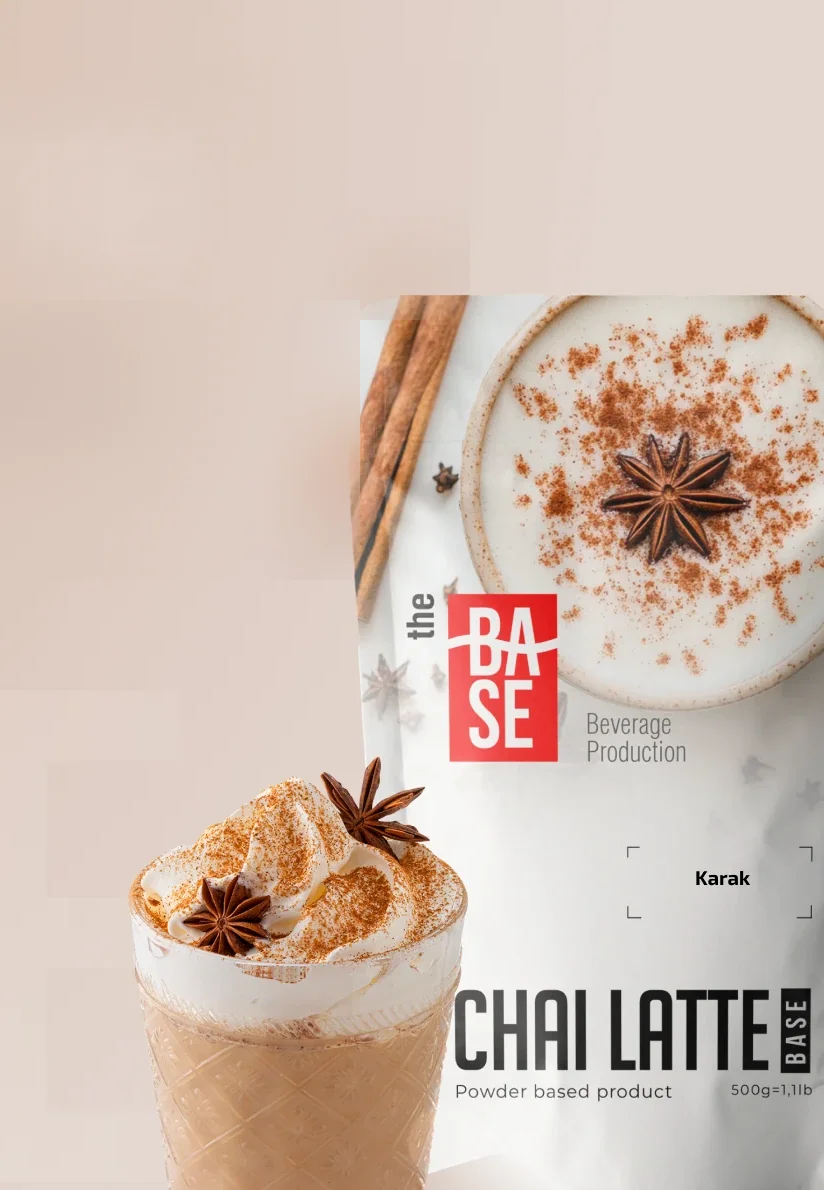
- Chai Latte: 25 g base, 150 ml milk or water, 8 oz cup, steam or stir
Cold and blended:
- Iced Matcha: 30 g base, 230 ml milk, 100 g ice, 12 oz cup, dry shaken
- Milkshake: 30 g base, 200 ml milk, 100 g ice, 12 oz cup, blend 30 seconds
- Frappe: 35 g base, 200 ml milk, 150 g ice, 14 oz cup, blend 30 seconds
- Iced Tea: 20 g base, 150 ml water, 150 g ice, 12 oz cup, shake
- Cordial: 15 g base, 150 ml sparkling water, 150 g ice, 12 oz cup, build in glass
Fruit tea from jam:
- Hot: 15 g with 150 ml hot water, 8 oz
- Cold: 20 g with 150 ml water, 8 oz
Pure powders (matcha, ube, butterfly pea, hojicha):
- Hot: 3 g whisked in 40 ml water at 70°C, then 170 ml steamed milk, 8 oz
- Iced: 4 g in 40 ml water at 70°C, 210 ml milk, 80 g ice, 12 oz
How much headroom should you leave in the cup?
Leave 10 to 20 ml below the rim. That space keeps the drink balanced, stops spills and leaves room for foam or garnish.
How do you add flavour without breaking the recipe?
Keep the base fixed and add accents on top in measured amounts:
- Fruit purée: 60 to 70 g, in the blender or at the bottom of the glass
- Chocolate or caramel sauce: 15 to 20 g, around the glass or on top
- Cold foam topping: 50 g topping powder whipped with 250 ml milk (ratio 1:5)
- Freeze dried garnish: 1 to 2 g on the foam
- Sugar syrup: 5 g, only in approved recipes
The rule is a maximum of two flavour accents per drink.
How do you roll the standard out to the team?
- Print one card per station with the doses above.
- Put a gram scale next to the base containers and require weighing for the first month.
- Mark fill lines on jugs for 150, 200 and 230 ml.
- Match each drink to one cup size and remove the others from that station.
- Taste the same drink from each barista weekly and log remakes; a rise points to the drink that needs retraining.
Where the Base fits
the Base makes dry beverage bases and pure powders at its own factory in the UAE, with Halal, HACCP and ISO 22000 certification. The doses above are built around its bases, which are medium sweet, work with plant milk and can be served iced. The Raf and Cream Latte bases contain no coffee, so the barista adds fresh espresso and keeps control of the coffee. The range covers 600+ flavours across 24 lines, including chai latte, frappe, iced tea and cordial. For teams, the Base runs masterclasses for groups of 20+ and helps chains build menus and signature drinks.
FAQ
Should baristas weigh powder or use a scoop?
Weigh it while the team is learning. Once the scoop has been checked against the scale for each base, a calibrated scoop is acceptable, but recheck it monthly.
Can the same doses be used with plant milk?
Yes. the Base bases are designed to work with plant milk, so keep the same grams and millilitres and adjust only if the plant milk itself is sweetened.
What cup size suits a frappe?
A 14 oz cup, because 200 ml milk plus 150 g ice and 35 g base needs the extra volume after blending.
Request free samples at /contacts, or visit the Al Quoz showroom, Monday to Saturday, 9:00 to 18:00.