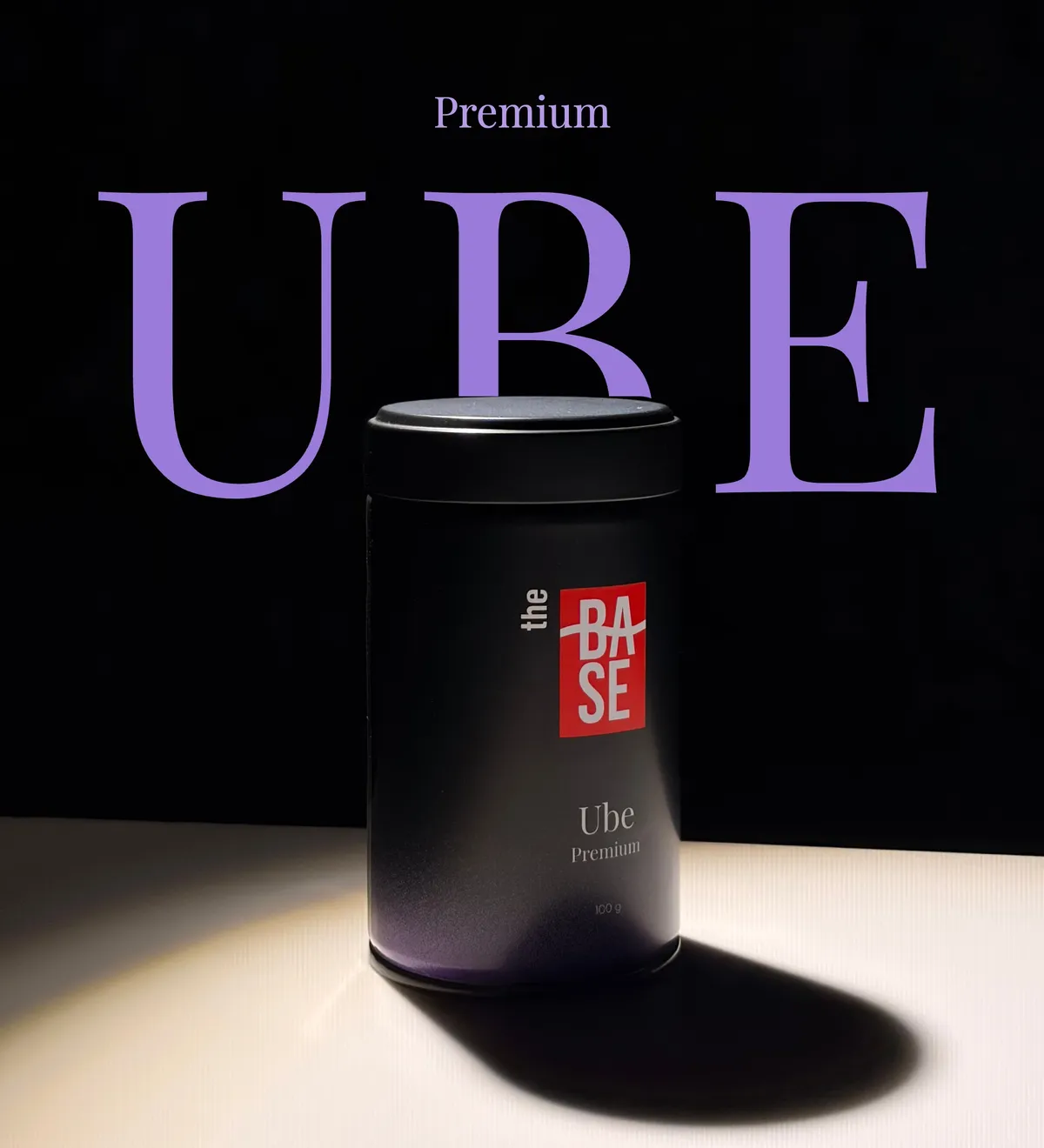
Ube is purple yam (Dioscorea alata), a root from the Philippines with a mild, nutty, vanilla-like taste and a colour no syrup can fake. In a café it works the way matcha does: a small dose of powder, whisked and topped with milk, gives a drink guests photograph before they taste it. If your menu already runs matcha, you can add an ube latte this week with the same bar tools.
Why is everyone ordering ube right now?
Three things push it. The colour performs on social feeds without any artificial dye. The flavour is gentle enough for guests who find matcha bitter. And it pairs with what cafés already stock: milk, cream, coffee and coconut. That makes ube a low-risk way to add a seasonal or signature drink without training a new skill.
Pure ube or a flavoured mix?
This is the decision that sets your cost and your quality.
- Pure ube powder is dried and milled purple yam, nothing added. You control sweetness, the colour is real, and the label stays clean.
- Ube flavour mixes are mostly sugar, creamer and colouring with a small share of yam, or none at all. Faster, but the taste is flat and the ingredient list is long.
Check the label before you buy. If sugar or a colour code comes before ube, you are paying for sugar.
How much ube goes into one drink?
With a 100% purple yam powder, a little goes a long way. These are the starting builds we use on the bar:
- Ube latte: 5 g powder, 250 ml hot milk
- Iced ube latte: 5 g powder, 200 ml cold milk, ice
- Ube cold foam: 3 g powder, 100 ml cream
- Ube smoothie: 5 g powder, 300 ml smoothie base
Whisk the powder with 30 ml warm water first, then add milk. That step removes lumps and brings the colour up. Sweeten to your house standard; pure ube has no sugar of its own.
What does an ube latte cost you per cup?
At 5 g per drink, one 100 g tin makes 20 drinks. Your ingredient cost is the tin price divided by 20, plus milk, cup and lid. Because the dose is small, ube usually lands close to a matcha latte on cost while selling at a signature-drink price. Run the numbers with your own milk and packaging prices before you set the menu price.
Three ways to sell it
- Ube cold foam on iced coffee. The easiest entry: no new base drink, just a purple layer on an americano or cold brew.
- Dirty ube latte. A shot of espresso poured over an iced ube latte. Coffee guests get something new without leaving coffee.
- Ube and coconut. Swap dairy for coconut milk for a tropical, plant-based version.
Where the Base fits
the Base makes beverage bases and pure powders at its own factory in the UAE, with Halal, HACCP and ISO 22000 certification. Ube Premium is our 100 g tin of 100% purple yam powder: no sugar, no colourants, no fillers. It is launching soon; cafés and distributors can ask for a free sample now and taste it at our showroom in Al Quoz, Dubai.
FAQ
Does ube taste like taro?
They are often confused. Taro is a different root with a starchier, earthier taste. Ube is sweeter and more vanilla-like, and its purple is deeper.
Can ube be served hot and iced?
Yes. Pure ube powder dissolves in both once it is whisked with a little warm water first.
Is ube suitable for vegan menus?
Pure ube powder is plant-based. Pair it with oat, almond or coconut milk for a fully vegan drink.
How long does ube powder keep?
Keep the tin closed, dry and away from light. Use the best-before date on the pack as your guide.
Want to try it on your bar? Request a free sample or visit the Al Quoz showroom Monday to Saturday, 9:00 to 18:00.